
Alaska Home Seller FAQs
Answers to the most common questions about selling a home in Alaska — from pricing and preparation to septic, negotiations, and closing costs
Selling a home in Alaska involves unique considerations that most sellers don't encounter in other states — from septic and well disclosures to seasonal timing and buyer financing challenges. Below are the questions I hear most often from sellers, along with honest answers based on my experience. For a complete walkthrough of the selling process, see the Alaska Home Seller's Guide.
How does Paul Oehlerts help homeowners sell property in Alaska?
I help sellers price their homes correctly using Alaska-specific data, not national averages. I evaluate condition, utilities, septic, wells, and heating systems to position the property accurately — reducing time on market and avoiding appraisal or financing issues that can derail deals late in the process.
My approach is education and transparency first. I walk sellers through every step so there are no surprises, and I explain the "why" behind every recommendation. For the full step-by-step process, see the Alaska Home Seller's Guide.
How does Paul determine the right listing price in Alaska?
I use a detailed Comparative Market Analysis (CMA) based on local sales data, current market conditions, property features, and early buyer behavior signals — views, saves, showings, and offer activity — to set a realistic price.
Overpricing in Alaska often leads to longer market time and price reductions, which ultimately hurts sellers' net proceeds every time. The data is clear: homes that are priced right from the start sell faster and for more money than homes that sit and get reduced.
My advice: listen to the real estate expert who gives you the "why" behind the price using real data — not friends or family who tell you how much they think your house is worth. Never get married to a number.
Why overpricing backfires: When a home is overpriced, the buyers who can actually afford it skip right past it because they're looking at homes with more value at that price point. The buyers who would love your home never see it because it's above their search range. The result is low activity, longer market time, and eventually a price reduction that signals desperation to buyers.
Do sellers need to fix septic or well issues before selling?
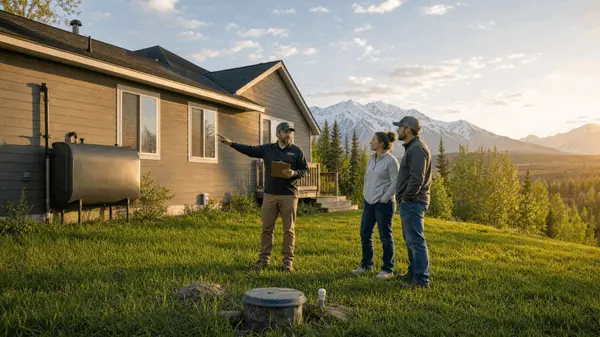
Not always — but unresolved septic or well issues can significantly limit your buyer pool and financing options. In Alaska, failed septic or water tests are a major red flag for most buyers and lenders. If a seller expects the buyer to pay for a failed system, the deal almost always falls apart. Buyers don't want to inherit expensive seller problems on a high-value purchase.
The reality: once a septic or well issue is discovered, it must be disclosed, which makes the home far less marketable to future buyers as well.
The good news is there are solutions. In many cases, the repair or replacement can be handled through an escrow holdback — allowing the work to be paid from the seller's proceeds at closing, without requiring large out-of-pocket expenses upfront.
I help sellers understand what must be repaired, what can be negotiated, and how to structure solutions that keep deals together. Typical costs range from $7,000-$9,000 for a tank-only replacement up to $28,000-$32,000 for a full lift station system. For detailed cost breakdowns, see Step 9 of the Seller's Guide.
Winter timing matters: Many septic installers in Alaska will not work in sub-zero temperatures. If a septic issue is discovered in winter, it can delay the transaction significantly. Pre-listing inspections can help identify these issues before they become deal-breakers.
How long does it take to sell a home in the Mat-Su Valley?
Most homes sell within 30 to 60 days when priced and prepared correctly. Rural properties or homes with utility issues may take longer.
From offer acceptance to closing, my average transaction closes in about 33 days with no complications. However, Alaska's average days on market runs around 100 days in winter and approximately 70 days in summer — so seasonal timing plays a significant role in how quickly your home attracts buyers.
I help sellers set realistic expectations based on property type, condition, location, and current demand so there are no surprises about timeline.
What are typical closing costs for sellers in Alaska?
Most sellers pay around 8 to 10 percent of the sale price in total closing costs. This typically includes:
- Agent commissions
- Title insurance
- Escrow fees
- Possible buyer concessions (closing cost credits negotiated in the offer)
- Prorated property taxes
- Any agreed-upon repairs or credits
I provide a custom net sheet before we list so you know exactly what to expect — no surprises at the closing table. You'll see the full picture of your estimated proceeds from day one. For more detail, see Step 13 of the Seller's Guide.
Should sellers get inspections before listing?
In some cases, yes. Pre-listing inspections can uncover issues early, reduce renegotiation, and build buyer confidence.
Here's why it matters: homes listed with completed inspections provided on the MLS tend to sell around 60% quicker than homes without one. It saves the buyer approximately $500 on their own inspection and gives them clear expectations of any issues upfront — which means fewer surprises, fewer renegotiations, and smoother closings.
I help sellers decide if a pre-listing inspection makes sense for their specific property. For some homes — especially those with older septic systems, wells, or deferred maintenance — it can be the difference between a clean transaction and one that falls apart at the inspection stage.
How does Paul help sellers prepare their home for market?
I advise on repairs, cleaning, staging, and disclosures that actually matter to Alaska buyers. My focus is on practical improvements that improve marketability without wasting money on unnecessary upgrades.
Key areas I evaluate with every seller:
- Health and safety items — smoke detectors, CO detectors, GFCI outlets, handrails, deck safety
- Curb appeal basics — yard cleanup, exterior condition, driveway accessibility
- Interior presentation — decluttering, deep cleaning, staging where it makes sense
- Systems and disclosures — heating, septic, well, roof condition, known issues
I also give sellers as much time as they need to be ready without feeling rushed. I work on the seller's timeline — because life happens, and being ready matters more than being fast.
What mistakes do sellers commonly make in Alaska?
The biggest mistakes I see include:
- Overpricing based on emotion rather than market data — then chasing the market down with reductions
- Ignoring septic or water issues and hoping buyers won't notice (they will — or the lender will)
- Wanting to list as-is when basic health and safety items could be repaired at closing through seller concessions
- Underestimating buyer concerns about heating and access — especially for rural or off-grid properties
- Skipping disclosures or providing incomplete information, which creates legal risk and kills buyer trust
My job is to help sellers avoid these pitfalls before they cost time and money. Most of these issues are preventable with proper preparation and honest pricing from the start.
Why as-is hurts sellers: Listing as-is signals to buyers that there are problems you don't want to deal with. It attracts lowball offers and scares away financed buyers whose lenders require health and safety items to be resolved before closing. In most cases, handling basic repairs through a closing credit costs less than the price reduction you'd need to attract an as-is buyer.
How does Paul handle offers and negotiations for sellers?
I explain each offer clearly, outline risks, and help sellers choose strategies that protect their bottom line without killing the deal. My approach is firm, realistic, and data-driven.
For every offer that comes in, I prepare a custom net sheet showing exactly what you'll walk away with after all costs and concessions. This removes the guesswork and lets you compare offers based on what actually matters — your net proceeds, not just the sale price.
Some key factors I evaluate beyond price:
- Financing type — cash vs. conventional vs. VA/FHA (each has different timelines and requirements)
- Contingencies — inspection, appraisal, financing, and sale-of-home contingencies
- Closing timeline — does the buyer's timeline work with yours?
- Lender strength — local lenders with upfront underwriting are more reliable than big banks
- Buyer concession requests — closing costs, repairs, warranties
A higher offer with weak financing or heavy contingencies can net you less than a clean offer at a slightly lower price. I help sellers see the full picture.
Can Paul help sell rural or unique properties?
Yes. I have experience with rural, off-grid, and non-traditional properties throughout Alaska. I understand how to market them, price them correctly, and identify buyers who can actually close.
Rural properties come with unique marketing challenges:
- Financing limitations — some rural properties don't qualify for conventional, VA, or FHA loans
- Access considerations — seasonal roads, easements, winter plowing responsibilities
- Utility systems — wells, septic, generators, propane, wood heat all need clear documentation
- Appraisal challenges — comparable sales can be limited in remote areas
Professional photography is available at the seller's expense if the property is accessible. For remote properties, seller-provided photos are used — which is the most common approach. The key is presenting the property honestly and reaching the right buyer pool, which I handle through targeted marketing and accurate pricing.
Have a Question That's Not Listed Here?
Every property and situation is different — especially in Alaska. Reach out and I'll give you a straight answer based on real experience, not a sales pitch.
Real Estate News & Resources
REVIEWS

Shadowelite4ever


sara ellington

Walter Zimmerman
GET MORE INFORMATION

Agent License ID: 221443