
Moving to Alaska: An Honest Guide to What Life Is Really Like
By Paul Oehlerts, AK Properties For Sale | Real Broker LLC
If you are considering a move to Alaska, you have probably already seen the stunning mountain photos, read about the Permanent Fund Dividend, and imagined a life with more space and less traffic. All of that is real. But so are the parts that most relocation guides leave out: grocery bills that run 20% higher than the national average, five and a half hours of daylight on the shortest day of the year, and heating costs that can exceed your mortgage payment if you are not careful about the home you buy. This guide covers what living in Alaska is actually like, the trade-offs that come with it, and how to tell if it is the right fit for you. If you are already sold on the move and ready to start your home search, the Alaska Home Buying Guide covers financing, inspections, and the closing process in detail.
Alaska Living: At a Glance
Seasons and Daylight: The Part That Surprises People Most
Alaska has four distinct seasons, but they do not look like seasons in the Lower 48. Winter is long, dark, and cold. Summer is short, intensely bright, and almost uncomfortably warm by Alaska standards. The transitions happen fast, and the daylight swings are dramatic.
In Anchorage and the Mat-Su Valley, the winter solstice in late December brings roughly five and a half hours of daylight, with sunrise around 10:15 a.m. and sunset by 3:45 p.m. That is not a typo. You will drive to work in the dark and drive home in the dark. The flip side: on the summer solstice in June, you get over 19 hours of sunlight. It never truly gets dark. You will need blackout curtains to sleep, and you will probably stay up later than you planned because your brain cannot tell it is midnight.
| Season | Months | Daylight (Anchorage) | Temperatures | What to Expect |
|---|---|---|---|---|
| Winter | Nov - Mar | 5.5 - 10 hrs | 5°F to 25°F | Short days, snow, ice roads, northern lights |
| Breakup (Spring) | Apr - May | 13 - 18 hrs | 30°F to 55°F | Mud, melting snow, rapidly lengthening days |
| Summer | Jun - Aug | 17 - 19+ hrs | 55°F to 75°F | Long days, construction season, outdoor boom |
| Fall | Sep - Oct | 9 - 13 hrs | 25°F to 50°F | Termination dust, first snow, rapid daylight loss |
Why Daylight Matters for Homebuyers
The light cycle affects more than your mood. It shapes how you use your home, what features matter, and what you pay in energy costs. Homes with south-facing windows gain passive solar heat in winter. Homes in tree-heavy lots can feel darker during the short days. And if you work from home, a well-lit home office becomes a genuine quality-of-life feature, not a luxury. Many Alaskans use light therapy lamps during the dark months, and having good interior lighting matters more here than almost anywhere else in the country.
Alaskans call spring "breakup" because that is when the ice breaks apart on rivers and lakes. It is also when gravel roads turn to mud, snow melts unevenly, and everything looks messy. This is not the prettiest season, but it is short and the rapidly growing daylight hours make up for it. By May, you are gaining almost six minutes of daylight every single day.
Cost of Living: Where Alaska Is Expensive and Where It Is Not
Alaska ranks among the five most expensive states for overall cost of living, but the picture is more nuanced than that headline suggests. Some costs are genuinely higher than most of the country. Others are lower. And the tax structure creates real savings that partially offset the higher prices.
| Expense Category | Alaska Reality | vs. National Average | Notes |
|---|---|---|---|
| Groceries | ~$440/month per person | ~20% higher | Most food shipped from Lower 48; Costco and Fred Meyer help |
| Housing (Median) | ~$387,000 median sale | Below national average | Mat-Su Valley offers strongest value in the state |
| Heating (Winter) | $150 - $600+/month | Significantly higher | Depends on fuel type, home size, and insulation |
| Electricity | ~$130 - $180/month | Somewhat higher | Rates vary by utility provider (MEA, Chugach, etc.) |
| Gas (Vehicle) | ~$3.75 - $4.00/gallon | ~15-20% higher | More driving here than most states; budget accordingly |
| State Income Tax | $0 | Major savings | No state income tax of any kind |
| State Sales Tax | 0% (varies locally) | Major savings | Some cities charge up to 7.5%; Mat-Su Borough has none |
| Property Tax | ~1.0% - 1.4% effective rate | Slightly above national | Anchorage ~14-16 mills; Mat-Su ~10 mills |
Real Example: Monthly Budget Comparison
A family of four moving from a mid-cost-of-living state to the Mat-Su Valley might pay roughly $300 more per month on groceries and $200-$400 more on heating during winter. But that same family saves an estimated $400-$800 per month on state income taxes they no longer pay (depending on income level) and pays zero state sales tax on every purchase. For many families, the tax savings offset or exceed the higher grocery and utility bills.
The real cost variable is heating. If you buy a well-insulated home on natural gas in the Mat-Su Valley (served by Enstar Natural Gas), your winter heating bills will be significantly lower than someone heating a poorly insulated home with heating oil or propane. This is one of the most important factors in choosing a home here, and it is something I help every buyer evaluate before making an offer.
When Alaska Gets Genuinely Expensive
The cost of living figures above apply to Anchorage and the Mat-Su Valley, which are connected to the road system and have access to big-box stores. Rural and bush Alaska is a different story entirely. Communities only accessible by plane or barge can see grocery prices 50-80% higher than Anchorage. Most of this guide focuses on Southcentral Alaska, which is where the majority of the state's population lives and where most home purchases happen.
Taxes and the Permanent Fund Dividend
Alaska's tax structure is one of its biggest draws for relocators. The state charges no personal income tax and no statewide sales tax. Property taxes exist at the borough level and vary by location, but they are partially offset by another Alaska-only benefit: the Permanent Fund Dividend.
The PFD is an annual payment made to every qualifying Alaska resident, funded by investment earnings from the Alaska Permanent Fund (a state savings account built from oil revenue). In 2025, the PFD was $1,000 per person. For a family of four, that is $4,000 in annual income just for living here. The amount changes each year based on fund performance and legislative decisions. In 2024 it was $1,702 per person, and in 2022 it reached $3,284.
How PFD Eligibility Works
To qualify, you must be an Alaska resident for one full calendar year (January 1 through December 31) and intend to remain permanently. You apply each year between January 1 and March 31. If you move to Alaska in March 2026, for example, your first eligible PFD would be in fall 2028 (for the 2027 qualifying year). The PFD is taxable as federal income, but there is no state tax on it.
Mat-Su Borough residents benefit from one of the lower property tax rates in the state at roughly 10 mills compared to Anchorage's 14-16 mills. And the Mat-Su Borough charges no local sales tax. Palmer and Wasilla have small city sales taxes (3% for Palmer, 2.5% for Wasilla), but the borough itself does not add additional sales tax. This matters if you are comparing locations.
Infrastructure and Daily Life: What Nobody Tells You
Alaska is not a place where you can assume that city water, sewer, natural gas, and paved roads come standard with every home. Outside of Anchorage proper and parts of the Mat-Su Valley urban core, many homes are on private well water, septic systems, and may use heating oil or propane instead of natural gas. This is normal here, not a red flag, but it is something to plan for.
Water and Sewer
In Anchorage, most homes connect to municipal water and sewer. In the Mat-Su Valley, it is mixed. Some subdivisions in Wasilla and Palmer have city connections, but many homes throughout the valley use private wells and septic systems. Wells are drilled to varying depths depending on the area, and septic systems require periodic pumping and eventual replacement. If you are buying a home on a private well and septic, both systems need to be tested during the buying process. The Alaska Home Buying Guide covers well and septic testing requirements in detail.
Heating Systems
This is one of the most important things to understand before buying a home in Alaska. The type of heating system directly impacts your monthly costs and your quality of life during the seven-month heating season.
| Heating Type | Availability | Approximate Monthly Cost (Winter) | Considerations |
|---|---|---|---|
| Natural Gas | Anchorage, parts of Mat-Su | $150 - $300 | Cheapest option where available; Enstar service area |
| Heating Oil | Statewide | $300 - $600+ | Requires tank on property; price fluctuates with oil market |
| Propane | Statewide | $300 - $500+ | Common in rural areas; requires tank and regular delivery |
| Electric / Heat Pump | Statewide | $200 - $400+ | Air-source heat pumps gaining popularity; efficiency depends on temperature |
| Wood / Pellet Stove | Statewide (supplement) | Varies | Often used as a supplement; cord of wood ~$250-$350 |
What to Look for When Evaluating Heating Costs
Always ask for 12 months of utility bills before making an offer on any Alaska home. A home's insulation quality, window age, and foundation type affect heating costs as much as the fuel source does. A 2,000 square foot home with modern insulation and double-pane windows on natural gas will cost half as much to heat as the same-sized home with older construction and single-pane windows.
When you work with me, evaluating heating systems and energy costs is part of every property walkthrough. It is one of the most common areas where buyers from the Lower 48 underestimate what they will spend.
Roads and Winter Driving
Alaska's road system connects Anchorage, the Mat-Su Valley, the Kenai Peninsula, Fairbanks, and a handful of other communities. But the state has far fewer miles of road per person than most states, and many communities are only accessible by plane or boat.
Within the road system, winter driving is a fact of life. Roads are plowed but often icy from October through April. Studded tires are legal from September 16 through April 30 and are extremely common. Four-wheel drive or all-wheel drive vehicles are popular but not strictly necessary if you have good winter tires and reasonable driving habits. Budget for studded tires ($800-$1,200 installed for a set of four), and understand that your vehicle will take more wear here than in most states.
Internet and Connectivity
Broadband internet is widely available in Anchorage, Wasilla, Palmer, and Eagle River through providers like GCI and Alaska Communications. Speeds are generally comparable to the Lower 48 in urban areas. As you move further out into Big Lake, Willow, Sutton, or Girdwood, options become more limited. If you work remotely, verify internet service at any specific property before making an offer. Starlink has become a viable option for rural properties, but it is worth confirming speeds at the actual location.
The Lifestyle Trade-Offs: What You Gain and What You Give Up
Every move involves trade-offs. Alaska amplifies them. The things that draw people here, space, nature, independence, are the same things that make daily life different from what you are used to.
| What You Gain | What You Give Up |
|---|---|
| Mountains, glaciers, and wildlife in your backyard | Mild winters, easy travel to other states |
| No state income tax, no statewide sales tax | Higher grocery and utility costs |
| More land and space per dollar than most markets | Fewer dining, shopping, and entertainment options |
| Strong sense of community and self-reliance | Distance from extended family in the Lower 48 |
| 19+ hours of summer daylight for outdoor activities | 5.5 hours of winter daylight that can affect mood |
| Annual Permanent Fund Dividend ($1,000+ per person) | One-year residency requirement before first PFD |
| World-class fishing, hiking, and outdoor recreation | Limited professional sports, cultural venues, nightlife |
| Slower pace and less traffic (outside Anchorage) | Fewer healthcare specialists; may need to fly to Seattle |
Why the Lifestyle Works for Some People and Not Others
The people who thrive in Alaska tend to be the ones who genuinely enjoy being outdoors, do not mind driving 30-45 minutes to a big-box store, and can handle several months of cold and darkness without it significantly affecting their mental health. If your social life depends on walkable urban amenities, live music every weekend, or being within a short flight of major cities, Alaska may be harder to love. This is not a judgment, it is practical information that can save you the cost and stress of a move that does not fit.
Where People Live: A Quick Guide to Alaska's Most Popular Areas
About 75% of Alaska's population lives in Southcentral Alaska, concentrated in Anchorage and the Mat-Su Valley. These are the areas where most home purchases happen and where you will find the most infrastructure, services, and housing options.
Anchorage
Alaska's largest city (population roughly 290,000) offers the most urban amenities in the state: hospitals, restaurants, big-box retail, and cultural venues. Housing costs are higher than the Mat-Su Valley, but you get city water and sewer, natural gas, and shorter commutes to services. If you want to be close to the airport for travel Outside (the local term for the Lower 48), Anchorage is your best option. Explore the Anchorage area guide.
Wasilla
The Mat-Su Valley's commercial hub (population roughly 10,000 in the city, with over 50,000 in the greater area). Wasilla offers Walmart, Costco, Fred Meyer, and most services you would expect. Property taxes are lower than Anchorage, land parcels are larger, and you are about 45 minutes from Anchorage via the Glenn Highway. A strong choice for families who want space without sacrificing convenience. Explore the Wasilla area guide.
Palmer
A small-town community with a strong agricultural heritage, sitting at the base of the Chugach and Talkeetna mountain ranges. Palmer has its own character distinct from Wasilla, with a walkable downtown, farmers markets, and a close-knit feel. Housing options include in-town neighborhoods and rural acreage. Explore the Palmer area guide.
Eagle River and Chugiak
These communities sit between Anchorage and the Mat-Su Valley along the Glenn Highway. They offer a more suburban feel than downtown Anchorage with easier access to outdoor recreation. Eagle River has its own identity and school district options, and Chugiak extends further north toward the rural fringe. Explore the Eagle River guide | Explore the Chugiak guide.
Big Lake, Willow, and Sutton
These are your options for more space, more land, and more privacy. Homes here often sit on one to five acres or more, with well and septic being standard. Big Lake is popular with boating and fishing families, Willow is the gateway to the Parks Highway and Denali country, and Sutton sits in the scenic Matanuska Valley surrounded by mountains. Services are more limited than Wasilla or Palmer, so you trade convenience for elbow room. Big Lake | Willow | Sutton.
Girdwood
A resort community about 40 minutes south of Anchorage, known for Alyeska ski resort and a laid-back mountain vibe. Housing here tends to be higher-priced for the size, but the location between mountains and ocean is hard to match. Explore the Girdwood area guide.
Exploring Alaska Communities?
Each of these areas has a detailed Featured Area Guide covering housing, lifestyle, schools, and commute times. If you are comparing communities, I am happy to walk you through what each one offers and help you find the right fit.
Practical Moving Tips for Alaska
Timing Your Move
If you have flexibility, moving to Alaska between May and September is significantly easier than winter. Roads are clear, moving trucks can get in and out without ice complications, and you will have daylight to unpack and settle in. That said, military PCS moves and job relocations do not always allow you to choose, and winter moves happen every day. Just build in extra time for weather delays.
What to Bring (and What to Leave Behind)
Bring your all-wheel-drive or four-wheel-drive vehicle if you have one. Ship it up via the Alaska Marine Highway (ferry) from Bellingham, Washington, or drive up through Canada, which takes roughly four to five days from the Lower 48. If your vehicle is two-wheel-drive, plan to budget for a replacement or a good set of studded tires.
Household goods typically ship via moving container (PODS, ABF U-Pack) or traditional moving company through Tacoma or Seattle. Expect 2-4 weeks transit time. Shipping a full household from the Lower 48 to Anchorage typically costs $8,000-$15,000 depending on volume and company.
Getting Your Alaska Driver's License
New residents must obtain an Alaska driver's license within 90 days of establishing residency. You will also need to register your vehicle with the Alaska DMV. If you plan to use studded tires, they are legal from September 16 through April 30 without any additional permit.
Healthcare Planning
Anchorage has the most healthcare options in the state, including Providence Alaska Medical Center and Alaska Regional Hospital. The Mat-Su Valley has Mat-Su Regional Medical Center in Palmer. For specialty care, some procedures may require travel to Anchorage or, in some cases, Seattle. If you are on a specific healthcare plan, verify provider coverage in Alaska before your move. TRICARE (military healthcare) is well-supported given the strong military presence at JBER (Joint Base Elmendorf-Richardson).
Who Thrives in Alaska (and Who Does Not)
After helping clients relocate here from across the country, I have seen patterns in who loves Alaska and who struggles. This is the most honest section of this guide.
Alaska Tends to Be a Great Fit If You...
Enjoy outdoor activities like fishing, hiking, skiing, or snowmachining. Value space and privacy over walkable urban amenities. Are comfortable with a slower pace and a smaller social scene. Can handle cold and darkness for several months without it seriously affecting your well-being. Want lower taxes and are willing to trade that for higher grocery and utility costs. Are self-sufficient or enjoy learning practical skills (basic home maintenance matters more here). Have stable remote work or a job lined up in a local industry (healthcare, oil, military, construction, government).
Alaska Might Not Be the Right Fit If You...
Rely heavily on walkable urban amenities, nightlife, or cultural events. Have a health condition that requires frequent specialist visits not available locally. Are sensitive to Seasonal Affective Disorder (SAD) and have not successfully managed it before. Expect the same level of retail, dining, and entertainment options as a mid-sized Lower 48 city. Need to travel frequently to the Lower 48 on a tight budget (flights to Seattle start around $200-$400 round trip). Cannot tolerate the idea of winter driving on ice and snow from October through April.
Neither of these lists is absolute. Plenty of people who fit the "might not be right" description have moved here and built great lives. But going in with clear expectations makes the transition far smoother than arriving with unrealistic ideas about what Alaska is going to be like.
Frequently Asked Questions About Moving to Alaska
How much does it cost to live in Alaska compared to the Lower 48?
Overall, the cost of living in Alaska is roughly 5-10% above the national average for Southcentral communities like Anchorage and the Mat-Su Valley. Groceries run about 20% higher, and heating costs are significantly more during winter. However, there is no state income tax and no statewide sales tax, which can offset these costs substantially depending on your income level. The Mat-Su Borough also charges no local sales tax, though the cities of Palmer and Wasilla have small city sales taxes.
What is the Permanent Fund Dividend and how much is it?
The PFD is an annual payment to every qualifying Alaska resident, funded by investment earnings from the state's oil-wealth savings account. In 2025, it was $1,000 per person. The amount varies each year. To qualify, you must be an Alaska resident for one full calendar year and apply between January 1 and March 31. For a family of four, the PFD represents $4,000 or more in annual income.
How bad are the winters really?
In the Mat-Su Valley and Anchorage, winter temperatures typically range from about 5 to 25 degrees Fahrenheit from November through March. It is cold, but it is a dry cold that many people find more tolerable than the wet cold of the Pacific Northwest. The bigger adjustment for most people is the darkness, not the temperature. You will have roughly 5.5 hours of daylight on the shortest day. Light therapy lamps, regular exercise, and vitamin D supplementation are common coping strategies.
Do I need a four-wheel-drive vehicle in Alaska?
Four-wheel drive or all-wheel drive is strongly recommended but not technically required. What matters more is having good winter tires, preferably studded tires during the legal season (September 16 through April 30). Many Alaskans drive two-wheel-drive trucks and sedans with studded tires and do fine on plowed roads. If you live on a gravel road or in a more rural area, four-wheel drive becomes much more important.
Is Alaska a good place to raise a family?
Many families thrive here, particularly those who value outdoor recreation, close-knit communities, and space. The Mat-Su Valley and Eagle River are popular family areas with strong school options and room for kids to be kids. The trade-offs include fewer organized activities and extracurricular programs compared to larger Lower 48 communities, and the cold weather does limit outdoor play during the darkest months. Wasilla and Palmer both have detailed community guides covering schools and family life.
How much should I budget for heating a home in Alaska?
This depends entirely on the heating system, home size, and insulation quality. A well-insulated 2,000 square foot home on natural gas in the Mat-Su Valley might cost $150-$250 per month in winter. The same home on heating oil could run $400-$600 per month. Poor insulation can double any of these figures. Always request 12 months of utility bills before buying any home in Alaska. This is the single most important step in understanding your true cost of ownership.
Can I drive to Alaska from the Lower 48?
Yes. The Alaska Highway runs through Canada from Dawson Creek, British Columbia to Delta Junction, Alaska. From Seattle, the drive is roughly 2,200 miles and takes about four to five days. You will need a valid passport or enhanced driver's license to cross the Canadian border. The drive is scenic and well-maintained in summer, but winter driving through Canada requires serious preparation and experience.
What jobs are available in Alaska?
The largest employment sectors are healthcare, military (JBER), state and federal government, oil and gas, construction, fishing, and tourism. Remote work has become increasingly common, especially in the Mat-Su Valley where housing costs are lower. If you are moving without a job lined up, research the Alaska job market carefully. The unemployment rate tends to run slightly above the national average, and job options outside of Anchorage and Fairbanks can be limited.
What about earthquakes?
Alaska is seismically active. The state experiences thousands of small earthquakes each year, and major ones do occur. The 7.1 magnitude earthquake in November 2018 caused significant damage in the Anchorage area. Modern building codes in Southcentral Alaska account for seismic activity, and newer homes are built to withstand significant ground movement. When buying, an inspection that looks at foundation integrity is important. Earthquake insurance is available but not included in standard homeowner's policies.
How do I find the right community for me?
Start by identifying what matters most: commute time, school quality, property size, access to services, heating fuel type, and budget. I help buyers work through these questions before we ever start looking at specific properties. Each community in my service area has a detailed area guide covering what life is actually like there. And a 30-minute conversation can save weeks of research. Reach out any time.
Browse Newest Listings in the Mat-Su Valley and Anchorage Areas
Thinking about a move to Alaska?
Paul Oehlerts helps relocating families, veterans, and remote workers find the right Alaska community and home.
About Paul Oehlerts
Paul Oehlerts is a Real Broker LLC agent serving buyers and sellers across Alaska, including the Mat-Su Valley and Anchorage areas. A Marine Corps veteran and former TACP/JTAC, Paul brings the same discipline and clear communication from his military career to every real estate transaction. Known for his calm, educational approach, Paul helps clients navigate Alaska's unique real estate considerations, from well and septic systems to winter access, financing, and long-term value. He works with relocating families, veterans on PCS moves, and remote workers looking for the right Alaska community.
FROM OUR BLOG
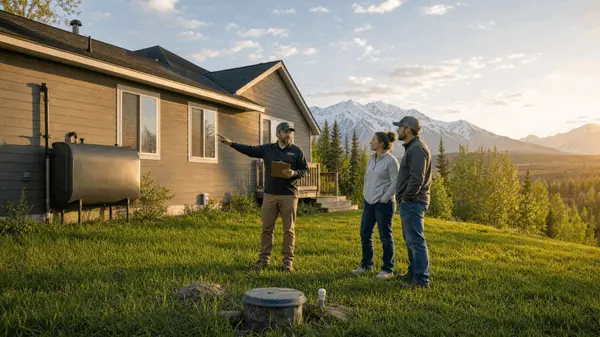
Wasilla vs. Palmer: Which Mat-Su Valley Community Is Right for You?
Wasilla vs. Palmer: Which Mat-Su Valley Community Is Right for You? By Paul Oehlerts, AK Properties For Sale | Real Broker LLC Wasilla and Palmer are the two core communities of the Matanuska-Susitna Valley, and they are the two areas where I help the most buyers and sellers. They sit roughly 10 mil
Selling a Home in Alaska: Timing, Pricing, and What to Expect
Selling a Home in Alaska: Timing, Pricing, and What to Expect By Paul Oehlerts, AK Properties For Sale | Real Broker LLC Selling a home in Alaska involves considerations that national real estate advice rarely covers. Seasonal timing matters more here than in most markets. Septic testing and COSA in
Buying a Home in Alaska: What You Need to Know Before You Start
Buying a Home in Alaska: What You Need to Know Before You Start By Paul Oehlerts, AK Properties For Sale | Real Broker LLC Buying a home anywhere is a major financial decision. Buying a home in Alaska adds layers that most national guides never mention: septic systems, private wells, heating fuel ty

"My job is to find and attract mastery-based agents to the office, protect the culture, and make sure everyone is happy! "